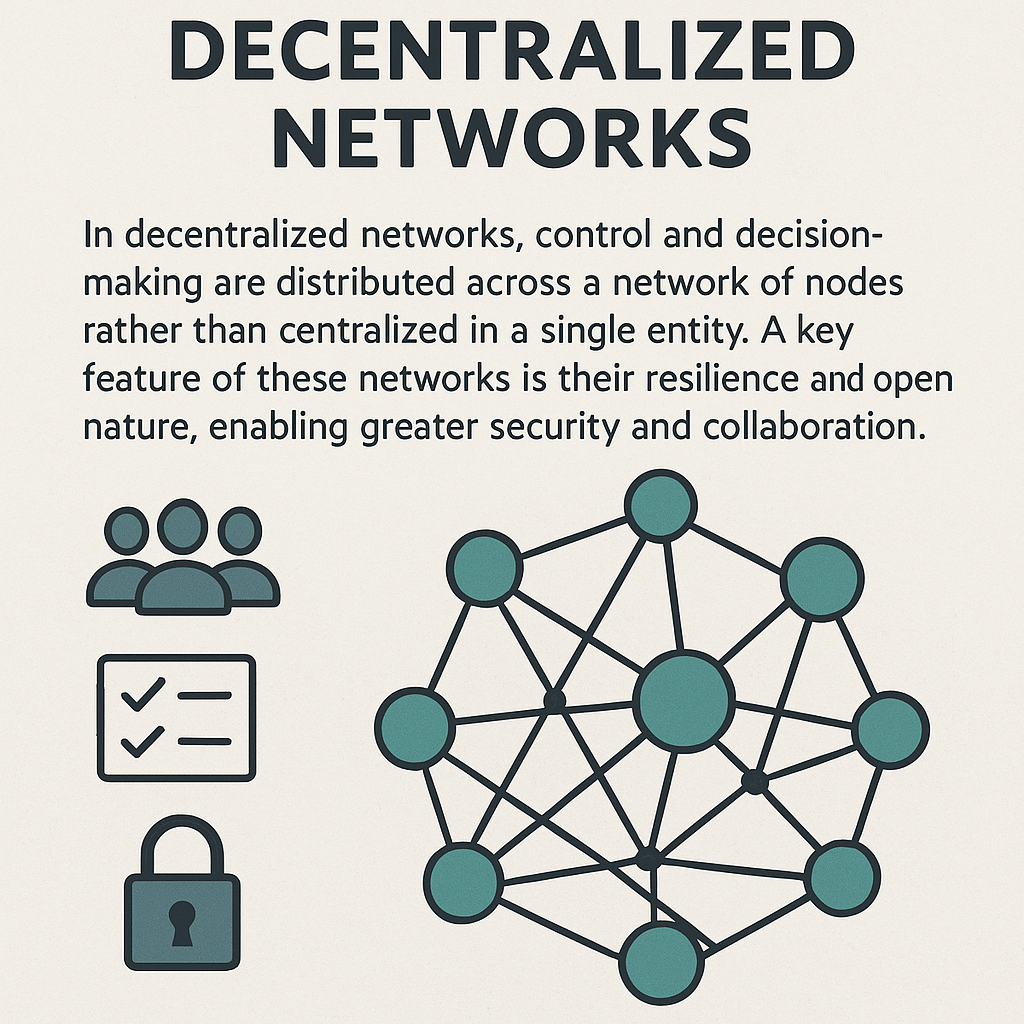
Origin Born from the tension between centralized control and the yearning for sovereign autonomy, decentralized networks emerged as a response to digital gatekeeping. Inspired by nature’s mycelial webs and ancient tribal communication systems, these architectures mirror organic wisdom—where strength lies not in a single node but in the interconnectivity of many.
Philosophy Decentralization champions trust through transparency and resilience through redundancy. These networks reject top-down hierarchy and instead empower individual nodes to self-authenticate, participate, and evolve collectively. They’re designed around principles of self-sovereignty, trustless validation, and shared stewardship. Iconic visuals—like cryptographic keys, overlapping halos, and signal-pulsed pathways—reflect identity, memory, and collective motion.
Future Values & Opportunities 🚀 Growth Through Localized Trust Systems like Localized Trust Node Networks (LTNN) illustrate how decentralized frameworks can root global technology in local cultures. They open gateways for community-run governance, dynamic incentive models, and inter-network fluidity.
🌱 Sustainability and Scalability As decentralized systems mature, they create space for eco-conscious protocols, green consensus models, and minimal footprint infrastructure. Growth isn’t just horizontal—it’s ethical.
🧩 Interoperability & Symbolic Unity The next frontier lies in bridging isolated ecosystems into collaborative symphonies. Symbolism embedded in their architecture—fire and ice motifs, tropical convergence, mirrored cranes—can reflect this tension and harmony.
💠 Creative Expression and Spiritual Resonance Decentralized networks can be canvases for spiritual storytelling and artistic innovation. The imagery isn’t just metaphorical—it’s structural, defining how participation feels rather than just how it functions.
 cafe adorin'